
Key facts
Students shuffle into the bleachers at Fort Recovery Elementary and Middle School in Mercer County, just a few miles from the Indiana border.1
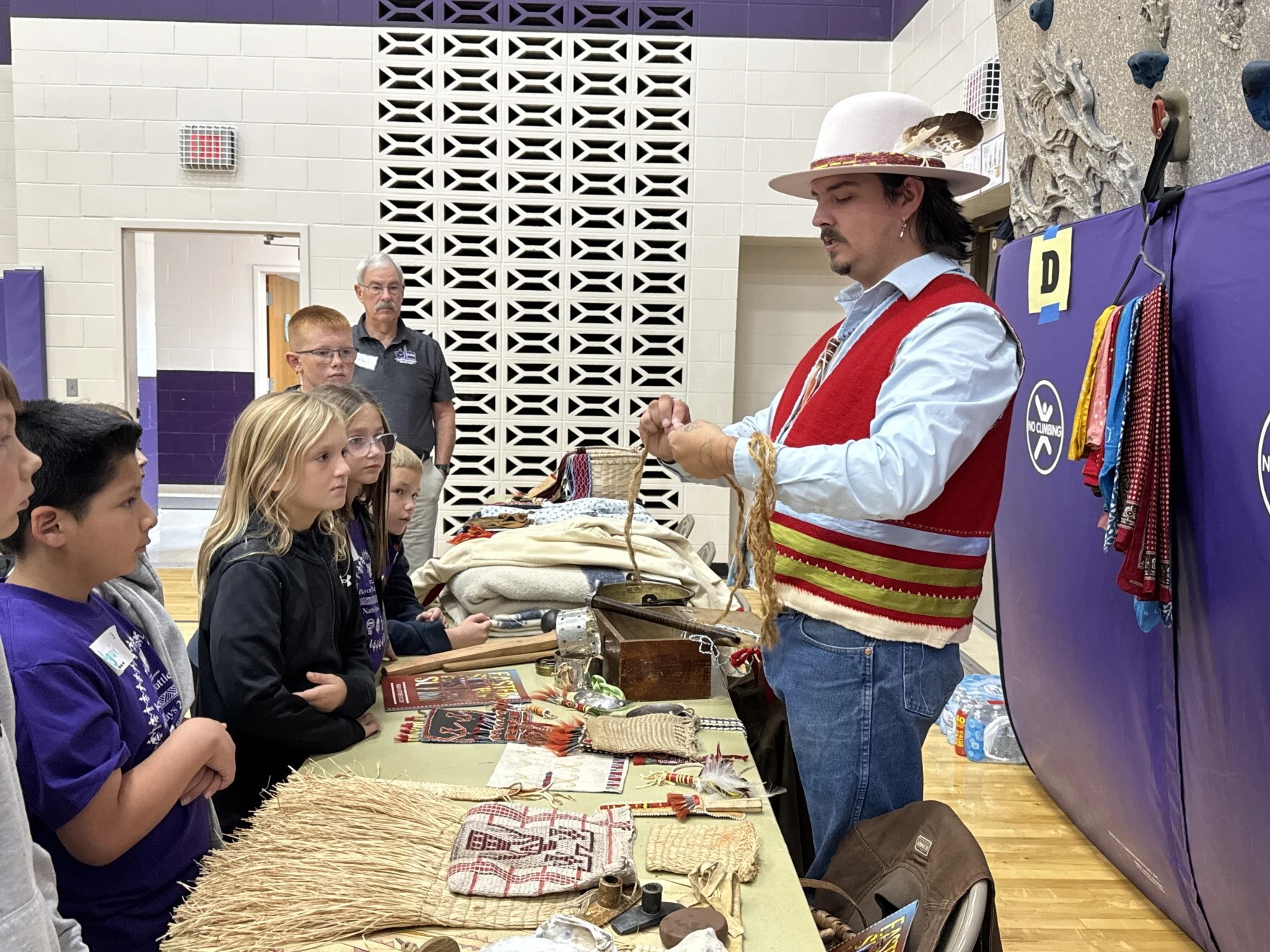
The auditorium is full of tables covered with Native American accessories, tools and craft-making materials.1
The programming begins when Kim Rammel takes the microphone and speaks to the audience.1
Event Expands On-Grade-School Curriculum
In the gymnasium are more than 150 fourth graders from Fort Recovery and Marion Local Schools just 20 minutes down the road, and recently they put their books down to learn directly from citizens of Ohio’s historic tribes.1
Joining them are 13 cultural interpreters from three tribal nations: the Miami Tribe of Oklahoma, the Eastern Shawnee Tribe of Oklahoma, and the Wyandotte Nation.1
The event is called Beyond the Battlefield, and this fall is the first time it has come out to local schools.1
As Rammel explained, these tribal nations were victorious in St. Clair’s Defeat, the most successful defeat of the U.S. military by Native American troops.1
A History Of Removal And Retention
The exhibit describes the aftermath for tribes involved in the battle today, and the tribes were eventually forcibly removed from Ohio by the state and federal government by the 19th century.1
Despite their hardships, they’ve retained key parts of their cultures.1
A Third Year At Fort Recovery
The request to incorporate grade school education into this year’s event came from the Wyandotte Nation, which puts on similar programming at River Raisin National Battlefield Park in Monroe, Michigan.1
Tribal historic preservation officer Josh Garcia of the Wyandotte Nation has taken part in that too.1
What Students Learned
Throughout the school day students learned about corn processing, wampum belt beading, lacrosse and corn husk flower making, among other activities.1
A Personal Connection
Fort Recovery Elementary Principal Laura Brandt said this outing expands on what students read in class.1
Nine-year-old Fort Recovery fourth grader Leigha Wilker said her favorite cultural station was the bead-making.1
Leigha Wilker said.1
Amanda Wilker said.1