
Key facts
- Russak sued the doctor, Zimmer Biomet and Canary Medical over the “unauthorized implantation” of his Persona IQ smart knee1
- The text message was from the company that made Russak’s new knee.1
- Over the next few days, Zimmer Biomet texted Russak four times.1 Russak said he didn’t understand the inquiries asking him to use an app.1
Steve Russak, 70, of Santa Rosa Valley, California, woke up from knee replacement surgery last year to a text message from the company that made his new knee.1
Over the next few days, Zimmer Biomet texted Russak four times..1 Russak said he didn’t understand the inquiries asking him to use an app.1
“I said, ‘What? I don’t know what you’re talking about.’,” Russak told KFF Health News.1
Finally, a company representative called and offered help setting up some accessories, Russak told KFF Health News.1
A 'Smart' Knee With Sensors And A Battery
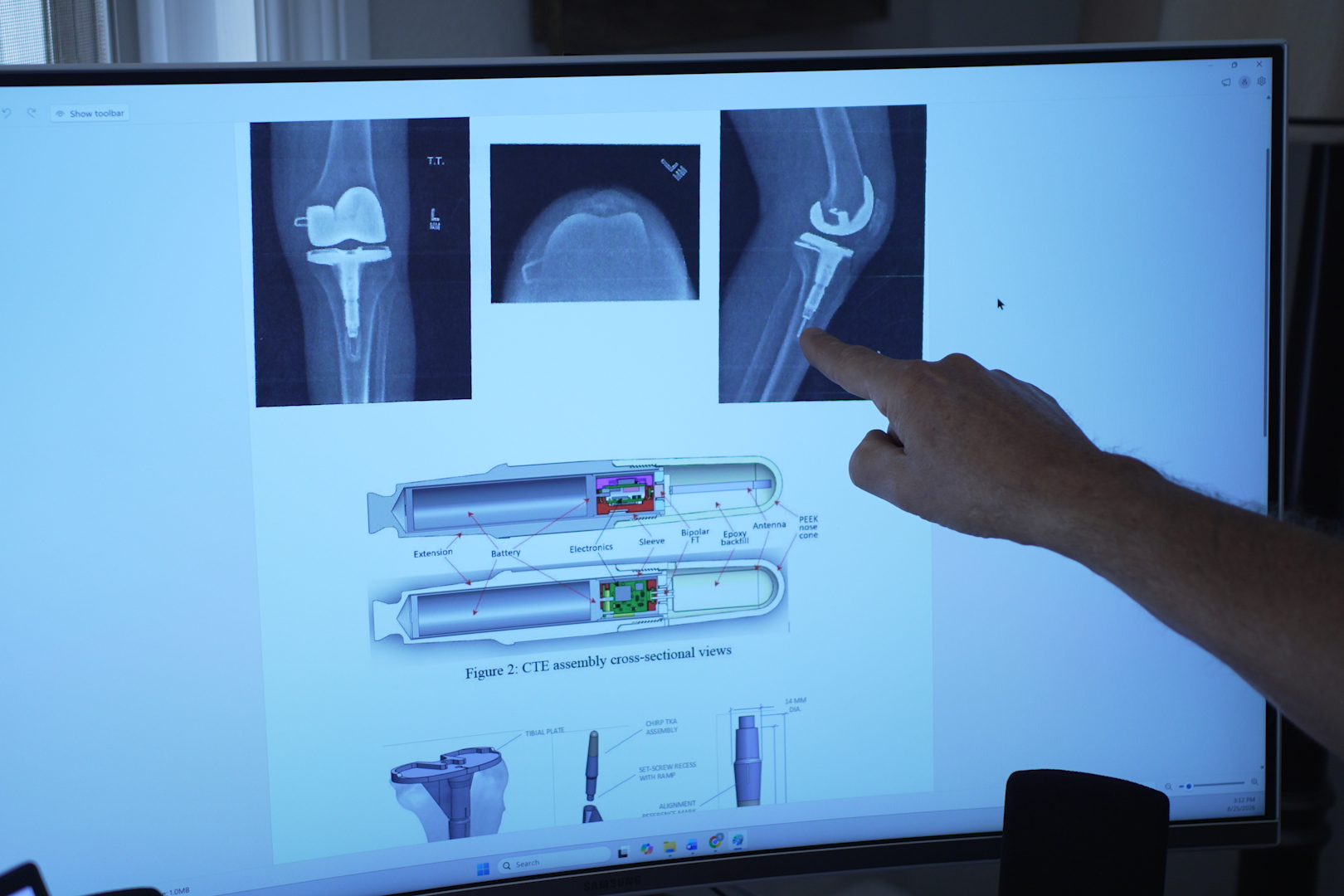
Russak had a “smart knee” put in — an artificial joint called the Persona IQ with a lithium-ion battery, sensors and a transmitter.1
The Persona IQ would send data about Russak’s gait and range of motion to his clinicians and Zimmer should he authorize it.1
Russak is suing the doctor, Zimmer and Canary Medical, a health technology company that helped develop the device.1
In his lawsuit, Russak claims the knee was an “unauthorized implantation.”1
Russak claims, according to Zimmer’s “patient-facing materials,” he should have been given the option to opt out of data collection or decline the knee altogether, but wasn’t.1
Russak said he doesn’t want to set up the device to collect and transmit data for several reasons, including his privacy.1
Russak said he recently couldn’t get an MRI because of compatibility issues.1
Doctor And Lawyer Didn’t Respond
Neither the doctor nor the doctor’s lawyer responded to multiple requests for comment.1
Russak said he has dropped the fraud and breach of fiduciary duty allegations originally filed against the doctor but is continuing to sue on other grounds, including lack of informed consent.1
The doctor has yet to respond to the complaint in court.1
Zimmer and Canary filed initial responses denying “each and every allegation” in Russak’s complaint.1
Zimmer and Canary offered a variety of defenses, including that any damages are the fault of another party or caused by actions or reactions “not reasonably foreseeable.”1
Canary Medical did not respond to requests for comment.1
Zimmer spokesperson Troy Kirkpatrick declined to comment on lawsuits against the company.1
Kirkpatrick said that nearly 90% of surveyed patients who received Zimmer’s joint replacements report they would choose an orthopedic device with remote monitoring capabilities again in the future.1
“The transmission of post-operative recovery data requires patient authorization at the time the patient sets up an account and is designed to support patient-surgeon relationships and postoperative care,” Kirkpatrick said.
Kirkpatrick said Zimmer takes privacy and compliance with regulations “very seriously.”1
A Trend In American Medicine
The smart knee is part of a burgeoning trend in American medicine.1
There’s now a range of internet-connected devices — from implants to external products such as blood pressure monitors , that report data about patients' conditions to doctors or other medical professionals.1
Sanket Dhruva is a University of California-San Francisco cardiologist and digital health researcher.1
“a lot of enthusiasm for remote monitoring technologies. There is tremendous potential,” Dhruva said.
To proponents, the products offer the chance for better care: They can provide measurements showing whether a patient’s glucose is swerving out of control, for instance.1
Nonetheless, such devices generally mean more money for doctors, who can charge to examine the information they collect.1
The next hearing in the case is scheduled for December.1